Whispers in the Mist: Filming Britain’s Smallest Birds
There is a quiet magic in woodland at first light.
Before the sun fully rises and before the wind begins to move through the trees, the forest holds a stillness that wildlife photographers live for. On this particular morning the woodland was wrapped in mist and fog, softening every branch and pine needle in a delicate veil of light.
It was the perfect setting to photograph and film one of Britain’s smallest birds — the Goldcrest.
Weighing little more than a five pence coin, the goldcrest is the smallest bird in the UK, yet it lives one of the most energetic lives in the woodland canopy. Rarely still for more than a second, they move constantly from branch to branch searching for tiny insects hidden among the needles.
For wildlife photographers, they are both fascinating and incredibly challenging to capture.
First Light Wildlife Photography in Misty Woodland
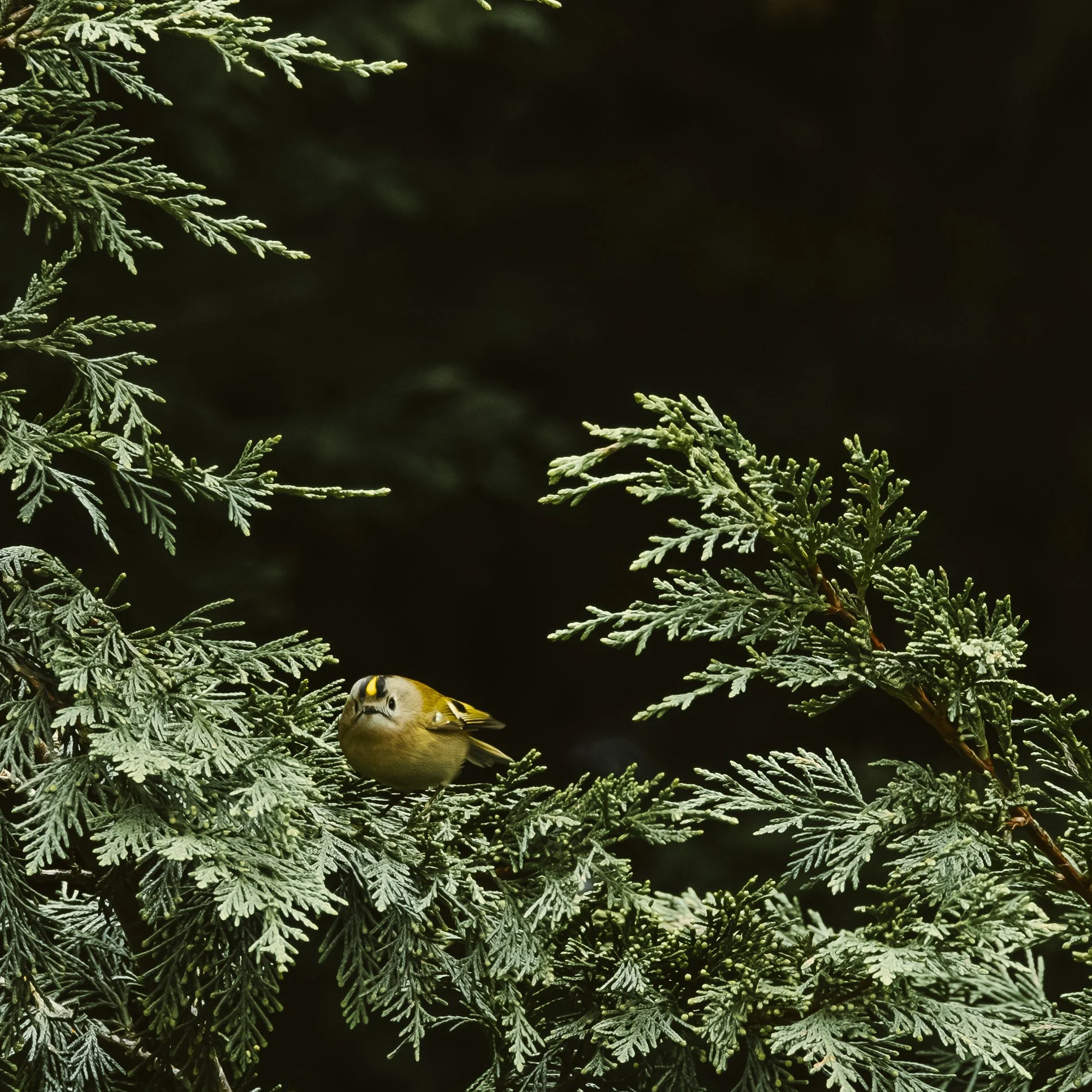
hidden in the conifers, only briefly popping out into view before vanishing.
Misty mornings can create some of the most atmospheric wildlife images possible. The fog naturally simplifies the background and adds depth, allowing a subject to stand out against the soft layers of the woodland.
To photograph the early activity high in the conifers, I paired my Canon EOS R5 with the Canon EF 500mm f/4L IS II USM.
This combination is ideal for small woodland birds because the long focal length allows you to:
Isolate tiny subjects high in the canopy
Compress the misty layers of the woodland
Capture fine feather detail even at distance
Goldcrests rarely sit still long enough for traditional framing. Instead of waiting for the perfect composition, I focus on observing their movement patterns.
Most goldcrests follow a small feeding circuit through the branches, often returning to the same spots every few minutes. Learning this behaviour dramatically increases the chances of capturing sharp images or usable footage.
Filming Goldcrests in Constant Motion
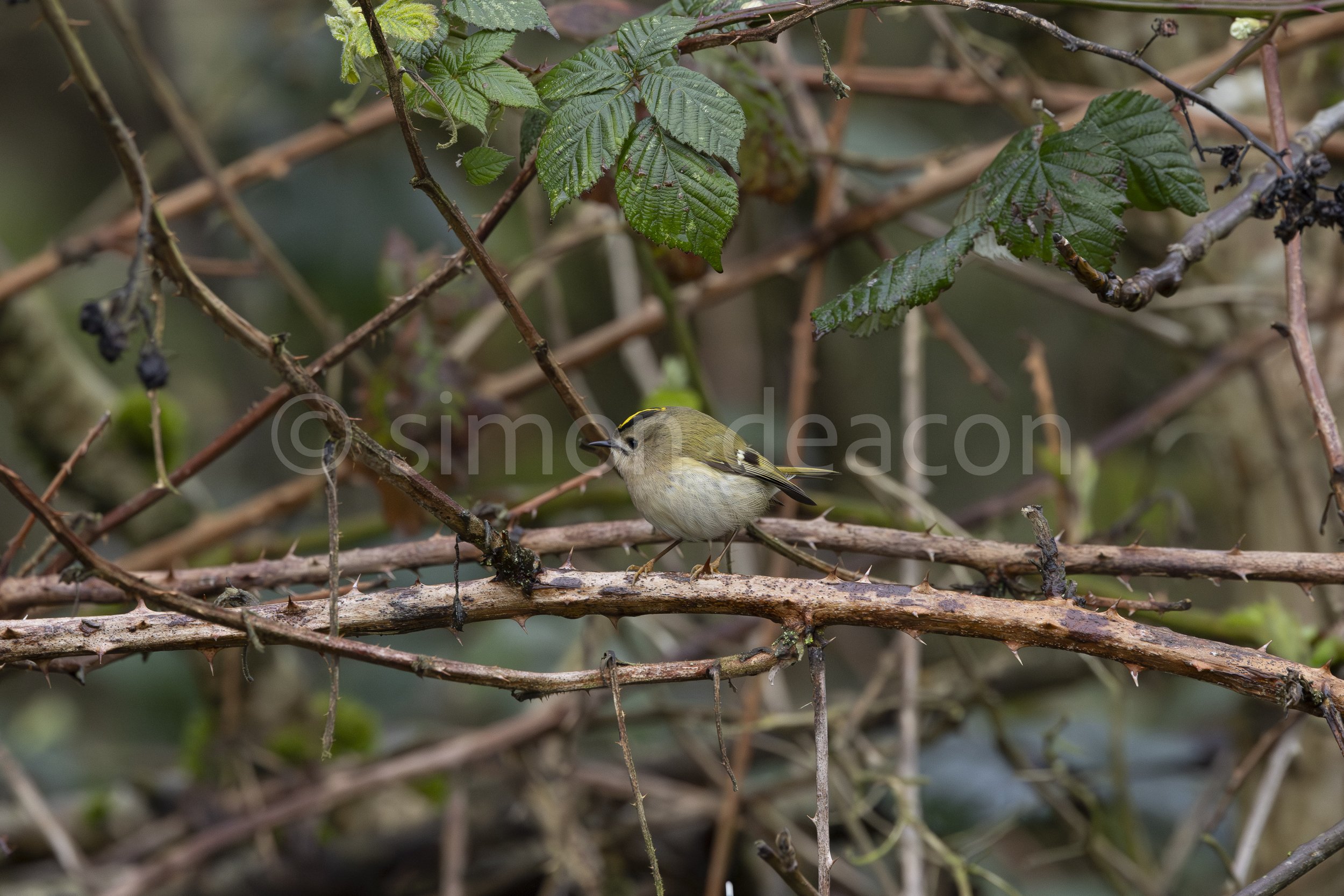
Goldcrests are constantly on the move. They hover briefly, cling upside down to branches and dart through the needles searching for spiders and insects.
For filming this behaviour I switched to the Canon EOS R6 Mark II, which excels at tracking fast moving wildlife and producing smooth natural footage.
Paired with the Canon RF 100-500mm f/4.5-7.1L IS USM, the flexibility of the zoom range allowed me to react quickly when the birds suddenly moved closer.
In wildlife filmmaking, especially with small birds, flexibility is everything. One moment the subject is twenty metres away in the canopy — the next it appears just a few feet in front of you before vanishing again.
Capturing those fleeting moments requires patience, observation and a willingness to wait for the woodland to reveal its rhythms.
Goldcrest Courtship Behaviour in Spring
As the mist slowly burned away and sunlight began filtering through the trees, the behaviour of the birds began to change.
It was no longer just feeding.
Among the branches a pair of goldcrests moved together, staying within inches of each other as they searched the foliage. Occasionally the male briefly flared his golden crest — a bright flash of colour bordered by black.
This subtle display is part of their early spring courtship.
Goldcrests build remarkable nests suspended beneath conifer branches, weaving together moss, lichen and spider silk to form a delicate hanging structure. Despite the bird’s tiny size, the nest can hold up to twelve eggs, one of the largest clutches relative to body size in the bird world.
Witnessing these early interactions felt like watching the first chapter of a new nesting season unfold.
A Rare Encounter: The Firecrest
Then came a moment I hadn’t expected.
Among the high-pitched calls of the goldcrests, a sharper note cut through the woodland. Moments later a small bird landed briefly on a nearby branch.
But this one looked different.
A bold white eyebrow streaked across its face, framing a vivid orange crest that glowed in the sunlight.
It was a Firecrest.
Firecrests are one of the UK’s most striking yet elusive woodland birds. Slightly larger than goldcrests, they are far rarer and often much harder to spot.
For a few seconds it moved through the branches in the same restless search for insects before disappearing back into the trees.
Encounters like this are the moments wildlife photographers dream about.
You cannot plan them.
You can only be ready.
Why Small Birds Make the Most Fascinating Wildlife Subjects
By the afternoon the woodland had completely transformed. The fog had lifted, sunlight warmed the forest floor, and the goldcrests continued their tireless search for food high in the canopy.
At just a few grams in weight, these tiny birds survive harsh winters, raise large broods and live incredibly energetic lives hidden among the branches.
For wildlife photographers and filmmakers, they are a reminder that the most extraordinary wildlife stories are often happening quietly above our heads.
Sometimes all it takes is patience, a little misty morning light, and a willingness to slow down long enough to see them.
As always
See you out there.
