A SUMMER OF BADGERS
One of the most challenging animals to photograph is the humble Badger (Meles Meles).
A nocturnal creature primarily found in the countryside, the Badger is a fascinating creature of habit and the ability to remain unnoticed while also tolerating human presence, provided it is respectful.
Despite its widespread popularity, the Badger is rarely seen in its natural habitat. This makes it one of the gentle, routine creatures yet also persecuted for its misguided role in bovine TB.
In recent years, I have developed a deeper understanding of the Badger through an ongoing project of studying these guardians of the countryside. This project has involved filming and capturing a few photographs. One notable moment came when I discovered my first sett on a late summer August evening as it emerged from its sett at the base of a large oak tree to begin its day.
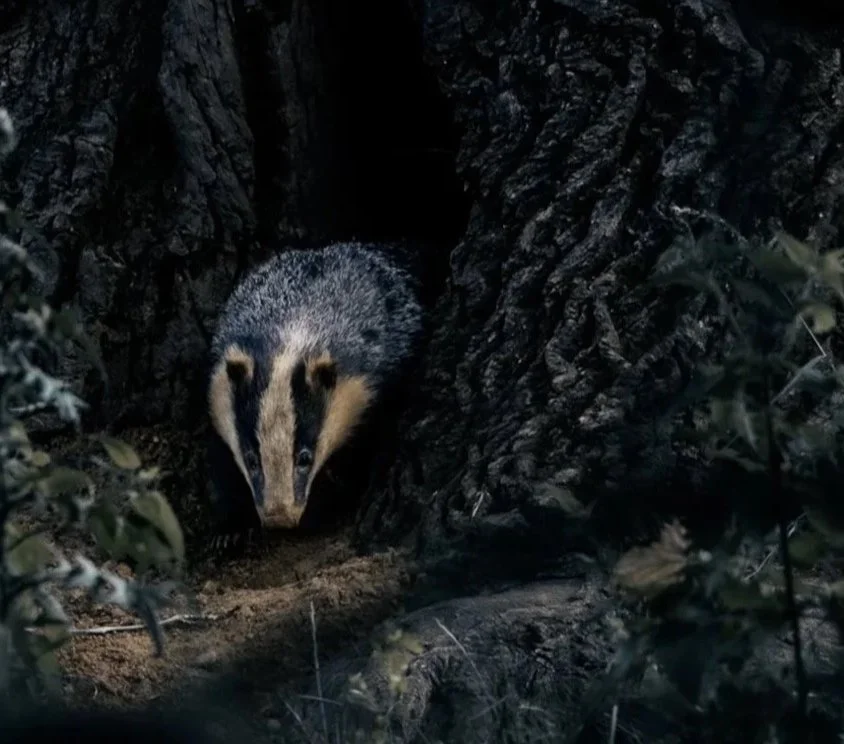
The humble badger emerging from it sett
From that moment on, I was captivated by the pursuit of learning more about the Badger. I have spent many an evening in dark, cold woods, determined to catch a glimpse of my local Badger, whether it was playing with its companions or foraging for food.
What I have discovered is that Badgers are highly sensitive to their surroundings, despite their limited eyesight. They compensate for this by relying on their exceptional sense of smell and hearing, which are often superior to those of humans.
I have encountered Badgers on several occasions, and although these encounters have been challenging, they have sharpened my fieldcraft skills. The approach to observing Badgers should be taken approximately one hour before sunset, with a slow and methodical approach to avoid making excessive noise, such as stepping on twigs or snapping branches off bushes.
Every so often, I pause to take in the surrounding environment, savouring the fresh, chilled air, a gentle breeze, and the distinct scents of the woodland, which constitute the Badger’s world.
I am familiar with their location from previous scouting trips and have selected a suitable spot. I established a hide approximately a month prior and cleared a small dirt pathway from my entry point to the hide. This creates a smooth and silent walk in and out, allowing the badgers to adjust and perceive it as non-threatening.
Once I am settled in the hide and have set up my gear, I recommend avoiding strong fragrances or deodorants, as they can be detected. Opt for soft and warm clothing that does not rustle when you move, as this will prevent you from being alone all night.
I meticulously prepare everything, including my camera gear, flask, and snacks, all placed in a clear plastic zip-lock bag to ensure soundlessness. I then settle back into my comfortable camping chair, ready for the evening’s activities.
It is important to be prepared for waiting, as badgers are never rushed. They can appear around dusk or several hours after darkness has settled. The excitement builds as you anticipate the moment when “Old Brock” appears, initially only showing their heads to survey the area with deep head bobs. Each head bob is accompanied by a deep, slow sniff of the night air. I have learned that badgers can detect any novel scent that does not belong in their domain. If this occurs, their head disappears back into their underground burrow, and you may not see them again that evening.
I have discovered that badgers have multiple ways of entering and exiting their sett. My current count is 15 different holes, and I find a new one nearly every other week. Additionally, badgers will use a specific sett hole for up to three weeks or until disturbed. Changing to another sett can be frustrating, as there is no guarantee that the telltale signs of fresh soil heaps or leaves on the ground, resembling a breadcrumb trail, will be present.
Returning to the hide, it has been approximately three hours since the first badger emerged. The group diligently checks all is well before the male badger fully emerges into the night. This magnificent creature, known as a boar, sits for a while, enjoying a thorough scratch, while the remaining members appear to engage in similar activities. The female badger, a sow, is equally beautiful and immaculate, smaller than the male and accompanied by two adorable cubs, one male and one female.
Their day commences with playful wrestling, followed by a ritual of grooming each other. As their parents begin the housework of removing old bedding from the sett to air for several nights, eliminating any unpleasant odours and parasites, the group prepares for the silent night. However, the serenity is punctured by the sound of dry leaves being dragged through the woods and into the sett.
The bedding for the badgers consists of dry leaves, grasses, and hay, if they can obtain it. This sett is situated on a private estate with a working horse centre, and I have successfully tracked a mischievous badger entering the hay barns. If such an opportunity arises, a blanket or sack is left out, which the badger eagerly accepts as a warm and luxurious treat. However, their absolute preference lies in fresh bluebells.
Filming these remarkable creatures requires meticulous planning for optimal conditions. The wind direction is crucial, as the badgers will not emerge if the wind is blowing from the east. This appears to be the only exception.
A small setup of infrared lights is positioned in an area away from the sett itself, this kind of light dosent disturb the badgers as harsh bright white lights will and this enables the observation and filming of these animals, photographs are best for the summer evnings when badger’s are above ground.
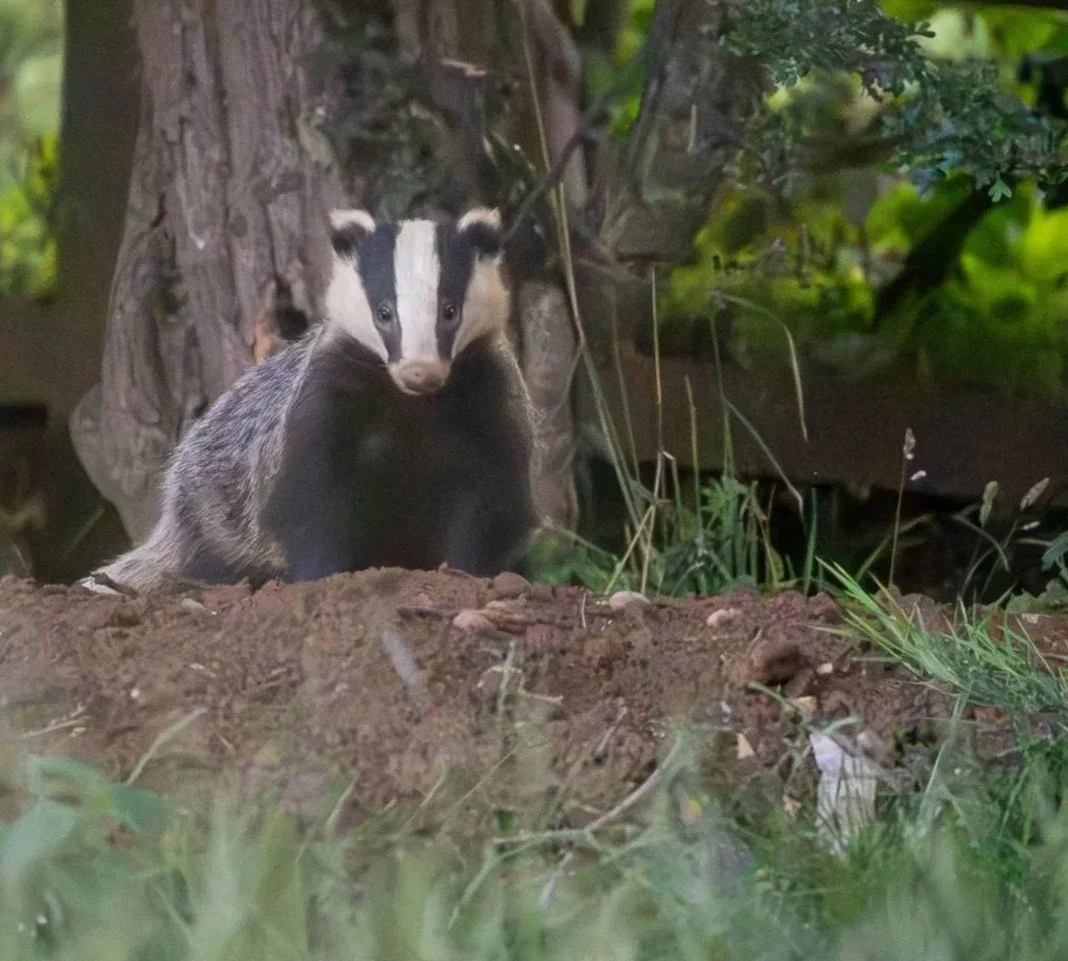
captured while digging and cleaning out old bedding in the sett.
During one of my recent visits, I sat outside the hide on a small camp chair while a badger snuffled around no less than four feet away from me. I was even fortunate enough to be incorporated into their clan by the male badger’s scent marking my boots.
Occasionally, I have the privilege of bringing them treats, such as peanuts, on cold nights. These peanuts are eagerly accepted and enjoyed, but they serve only as a treat and not a replacement for their primary food source.
Have you had the opportunity to witness these beautiful creatures in person? I would be delighted to hear your experiences shared in the comments below.
However, as winter approaches, the chances of seeing them diminish to occasional encounters. Therefore, the use of trail cams is relied upon to monitor their activities until spring returns.
Until next time …
